German learning guide
A German learning app for the words you keep meeting
A German learning app should spend your study time on words you will meet again. Vocabulum X takes you through 10,000 common German words in frequency order and schedules reviews using both your answer and response time. It gives you a vocabulary path whether you are beginning German or returning to it after a course.
The short words you keep hearing
A sentence can contain nouns you recognize and still leave you wondering what the speaker meant. German words such as doch and mal can change the tone or implication of what is said. Their use depends on context; the Goethe-Institut has an exercise devoted to German modal particles.
Frequency order brings recurring words into your study early. It also gives you more chances to notice them later in unrelated conversations and texts. Research on German teaching materials has examined word frequency as a way to select useful vocabulary for beginners. Vocabulum X carries that approach through a 10,000-word curriculum.
Let slower words return sooner
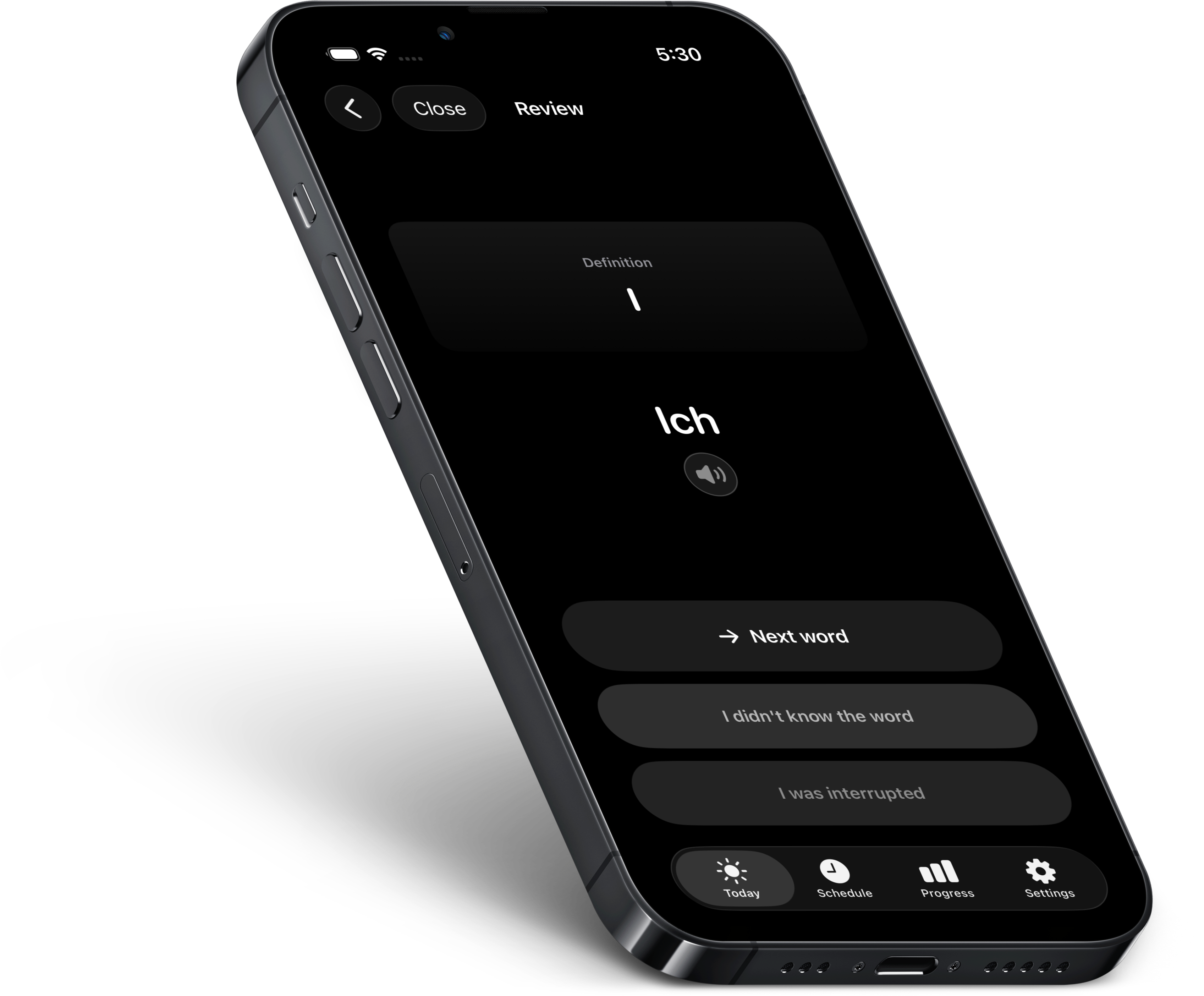
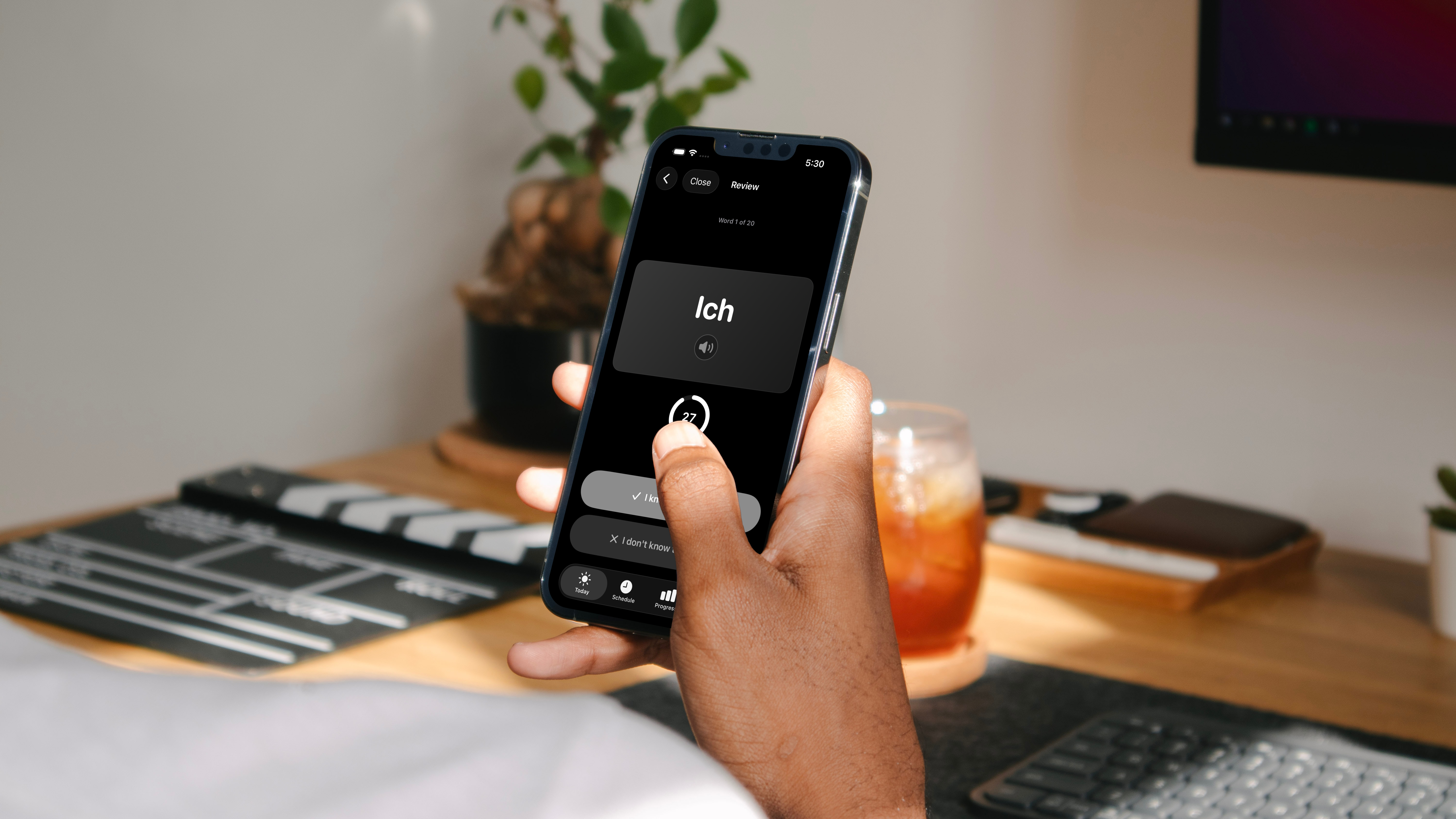
When you are comparing good apps to learn German, pay attention to what happens to a word after you get it right once. In Vocabulum X, each flashcard has a 30-second timer. A quick answer earns a longer interval before the next review. A word that takes longer returns sooner; a word you miss returns in 15 minutes. Response time gives the schedule a measure of hesitation alongside the answer you choose.
Reviews remain due as you add new words. You can set a target of 10 to 100 new words a day without pushing earlier words off the schedule. A meta-analysis of second-language studies found that spaced practice benefits later learning, which is why returning to words over time deserves a place in a German study routine.
Recognize a word when German moves it
German can put parts of a verb in different places. The verb anrufen means “to call,” while a sentence can place an at the end: Ich rufe dich an. The Goethe-Institut's beginner glossary shows the verb used this way.
Knowing the meaning of anrufen gives you a starting point when you meet the sentence. Grammar and listening practice help you follow the verb's shape and position. Goethe's free German exercises cover those skills alongside vocabulary.
Give vocabulary its own daily session
If you want an application for learning German vocabulary alongside a class or course, Vocabulum X gives you a defined amount of new material each day and keeps earlier words in review. Its five levels begin with the first 1,000 words and continue to 10,000. Each level opens after you have seen every word in the preceding level at least once.
German learning apps and courses can give you sentences in which to hear and use those words. As you practice, listen for words from your reviews, especially the short ones you once had to stop and think about.