Portuguese learning guide
How to learn Portuguese language vocabulary in a useful order
If you are deciding how to learn Portuguese language vocabulary, start with words you will encounter often and make time to recall them later. Vocabulum X takes you through 10,000 Portuguese words in frequency order. Its timed reviews bring words back according to your answers and response time, giving vocabulary a regular place in your study routine.
Frequency can change what you study first
A conjugation table may introduce falarei, meaning “I will speak.” In Brazilian Portuguese, vou falar, meaning “I'm going to speak,” is another way to express the future. A study of Brazilian news and television transcripts found that forms built with ir plus an infinitive appeared much more often than inflected future forms in its corpus. The researcher used that finding to decide what to teach early.
That is the value of checking frequency. It can give commonly used words attention before a learner has spent months working through a textbook's chosen topics. Vocabulum X applies frequency order across its Portuguese vocabulary list, so the words you study early have more chances to turn up again when you read or listen.
Choose the voices you want to understand
Brazilian and European Portuguese share a language, but they differ in pronunciation. Research comparing their vowels documents differences in sound and duration. A word you recognize on a card can still take practice to catch in speech, especially when you switch between speakers from Brazil and Portugal.
Choose listening material that fits where you expect to use Portuguese. Vocabulum X is a Portuguese language learning app for written vocabulary and English meanings; recordings and conversation give those words a sound and a setting.
Keep earlier words in reach
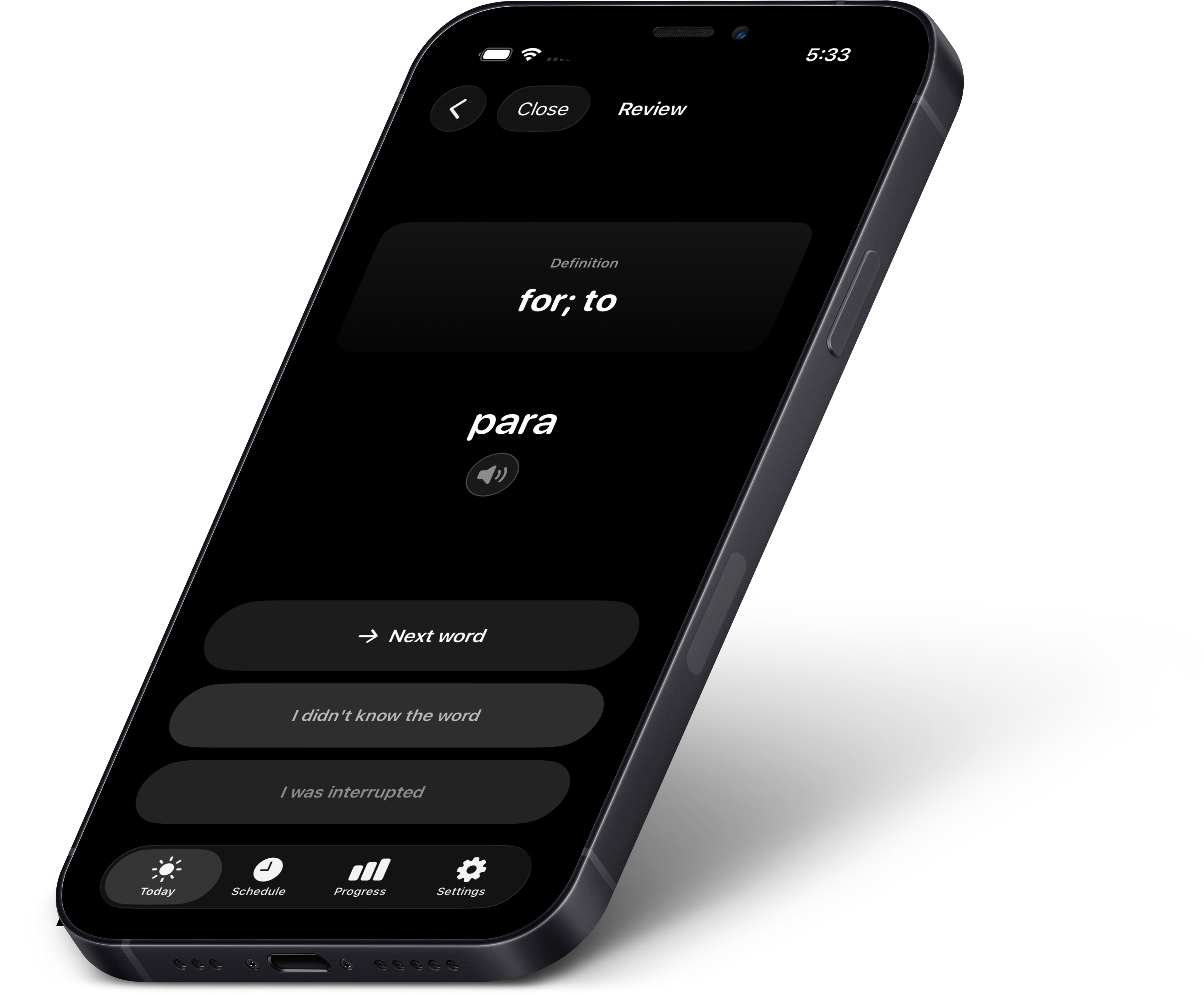
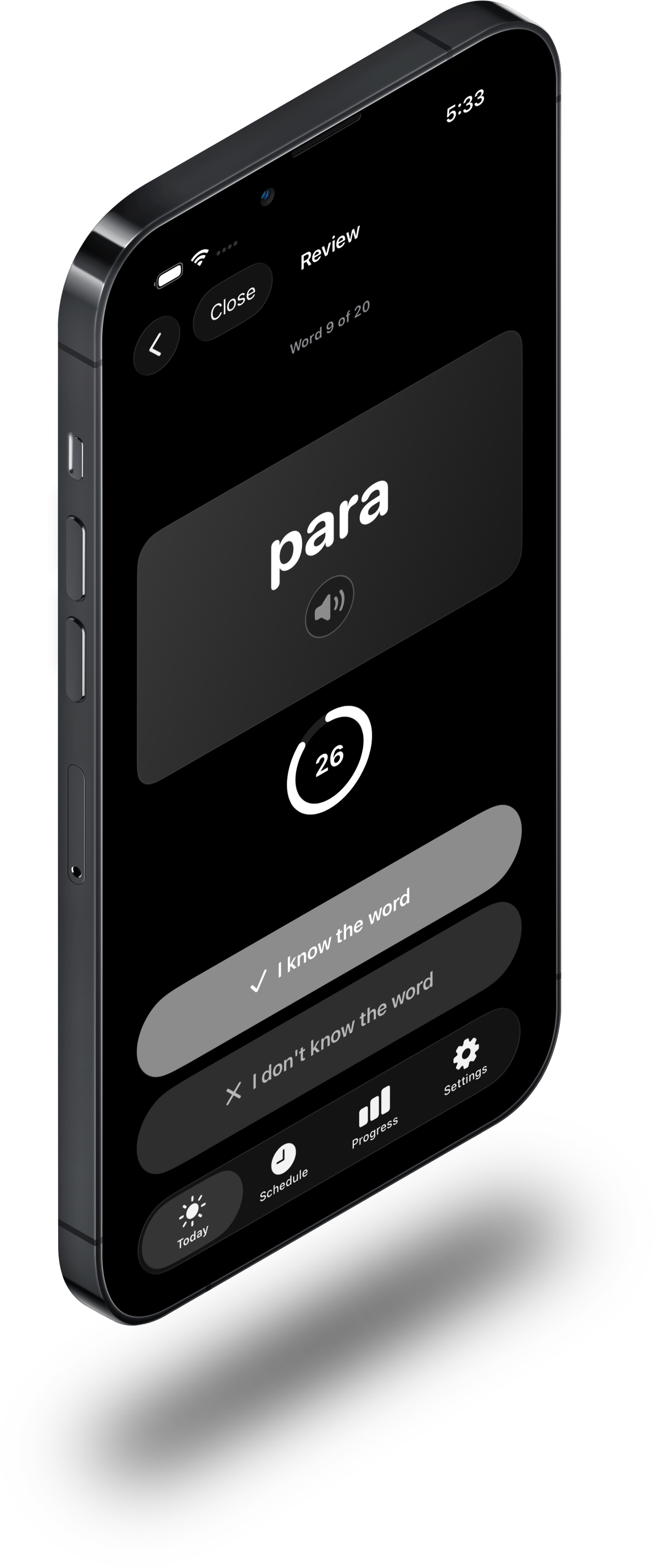
When comparing language learning apps for Portuguese, consider what happens to a word after you have answered it correctly. Vocabulum X uses a 30-second flashcard and records how quickly you respond. Words recalled quickly receive longer gaps before review. Slower answers return sooner, and a missed word comes back in 15 minutes.
You can choose between 10 and 100 new words a day. Words already due for review are added to that target, so new material does not crowd out earlier vocabulary. A meta-analysis of second-language learning studies found that spaced practice benefits later learning. Here, the schedule gives you repeated chances to retrieve a word without requiring you to decide when every review should happen.
Portuguese learning resources for listening practice
For Brazilian Portuguese, the University of Texas at Austin's Tá Falado has recorded dialogues with transcripts and pronunciation lessons, especially useful if you already know Spanish. For European Portuguese, Camões' learning resources include listening exercises and a pronunciation course.
Use either source to hear words you have studied in Vocabulum X. When a familiar word sounds different from what you expected, replay the phrase and listen for it again. That connection between a word you can recall and a word you can hear is worth making throughout the 10,000-word curriculum.